
Guide
Why Players Post Looking, Then Ignore the Message
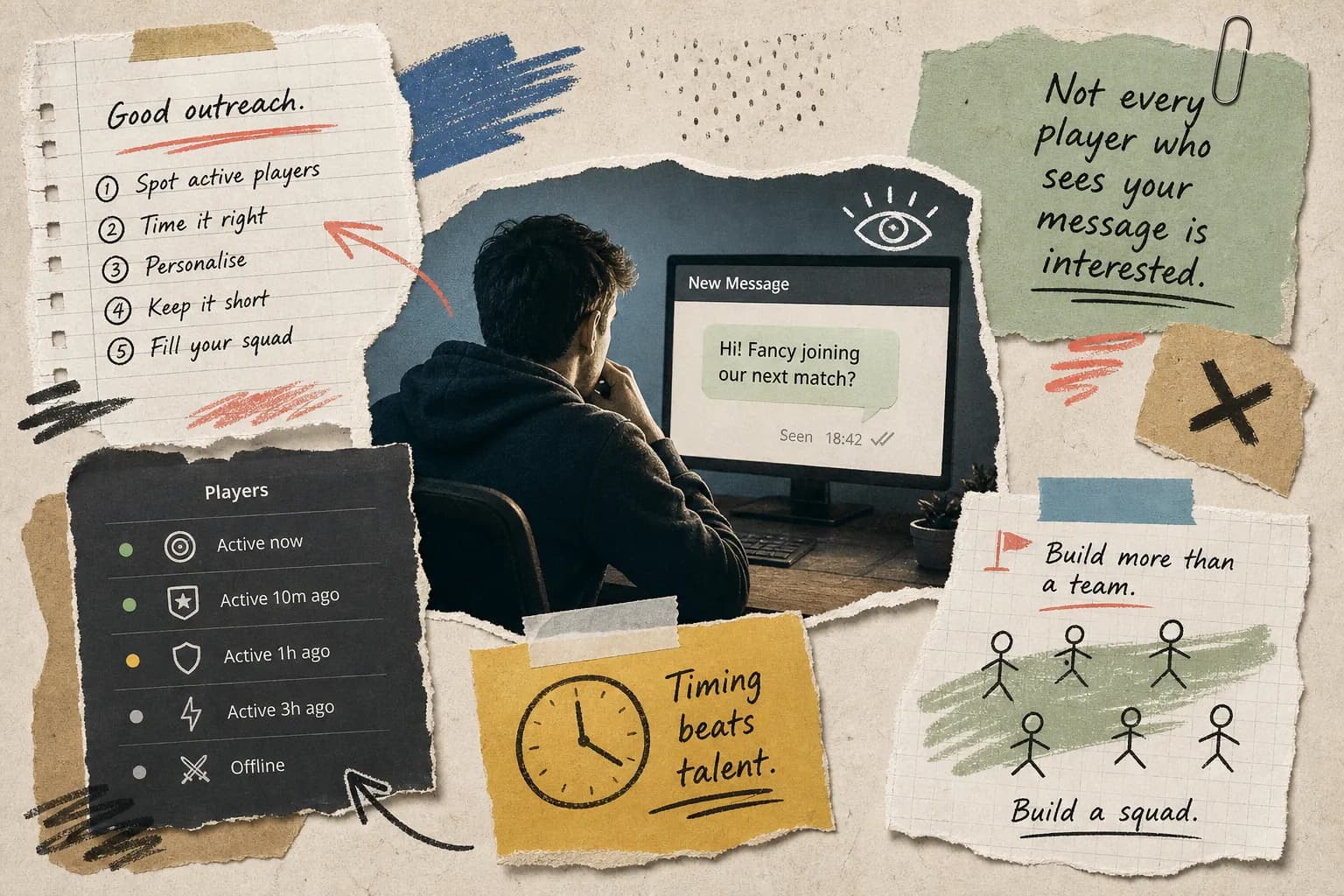
A player posts “still looking for a football team locally.” It gets thousands of views. A manager sends a message the same day. The squad is already playing, a midweek game is coming, and they need a body this week. Then nothing.
The inbox fills up. The squad stays short.
That is ghost availability: a public looking post that looks like demand, followed by silence when a club actually gets in touch. Views are not availability. A post reaching 3,000 people does not mean the player can train on Tuesday.
This is a practical guide for managers at Steps 1–10 who are tired of wasting messages on players who were never really in the market. By the end, you should know how to filter a post before you reply, what to put in the first message, and why the signings that stick rarely start from a public broadcast.
Why ghost availability looks real
A “looking for a club” post on X, Facebook, or Instagram is not a job application. It is a flag. Visible, public, and easy to ignore.
The player may already be training somewhere. They may only want a higher level than they admitted. They may not be checking DMs. Reach tells you the post travelled. It does not tell you they are free this week.
That is how managers send ten messages and sign nobody. The post doing well is evidence the topic is live. It is not evidence the player is available.
Why the message gets ignored
Most of the time it is not personal.
- They are already training with another club and hedging.
- Your level is below what they want, and the post did not say that.
- The post was for visibility, not a decision this week.
- They use three apps and missed the message.
- Work or family means they cannot commit to training right now.
- They posted two weeks ago and have already sorted something.
Plenty of players sit between “I need a club this week” and “I would listen if the right thing appeared.” Your message landed in the middle. You have no way of knowing which end they are on until they reply.
Filter the post before you send anything
Check for five things before you write a word:
- Position
- Area
- Level they want
- Last club
- Whether they can train this week
A post with all five is worth a message.
“Left back, Oxfordshire, looking for Step 6, last club X, can train Tuesday” is a player who has made themselves findable.
“Looking for a club, DM me” is a broadcast. Note it and move on.
That is not a judgement on the player. It is information about how far along they are. Spend time on the first type.
What to say when you do message
Give a serious player enough to reply in one line: who you are, the club, the step, when you train, and one question.
“Hi, I’m the manager at [Club]. We play Step 7 in [area] and train Tuesday and Thursday. Are you still looking, and can you train this week?”
If there is no reply within 48 hours, move on. A second chase message rarely changes it. That time is better spent on a player who answers.
Keep the first message short. Keep the expectation low. Do not build a shortlist out of silence.
How signings actually happen once the season has started
At Steps 1–10, the move that works is simple. Someone watches a player, sends a short message, invites them to train, and decides after one or two sessions.
Social looking posts skip the part that matters: seeing the player. You join a queue of clubs who have not watched them, do not know if they are sharp, and are guessing about level.
A public post can still be the start. It should not be the whole process. If the player replies, get them to training quickly. If they do not, they were never a real option this week.
Where serious players actually reply
A looking post is broadcast to everyone and accountable to no one. The player gets views and a scatter of DMs across different apps. The club gets silence and no way to know if the post is still live.
The useful shift is to start with players who have already made themselves contactable: position, area, level, and a place where a club message is expected.
That is what Skouto is for. A player puts the basics on a profile. A manager looking for a left back in their area finds people who set themselves up to be found. The message arrives where the player is actually looking, not in a forgotten request folder under a post from last week.
Public posts measure attention. A complete, reachable profile measures whether you can have a conversation.
What this means for how you recruit
Ghost availability is not going away. Players will keep posting “looking.” Some will keep not replying.
Filter the post first. Keep the first message short. Move on when there is no reply. For the signing that matters, watch, contact, train, decide.
The managers who fill gaps are not the ones chasing the loudest looking post. They are the ones spending time on players who answer.
Ready to put this into practice? Create your Skouto profile or browse open trials.