
Guide
What to Do in the First 72 Hours After a Football Release
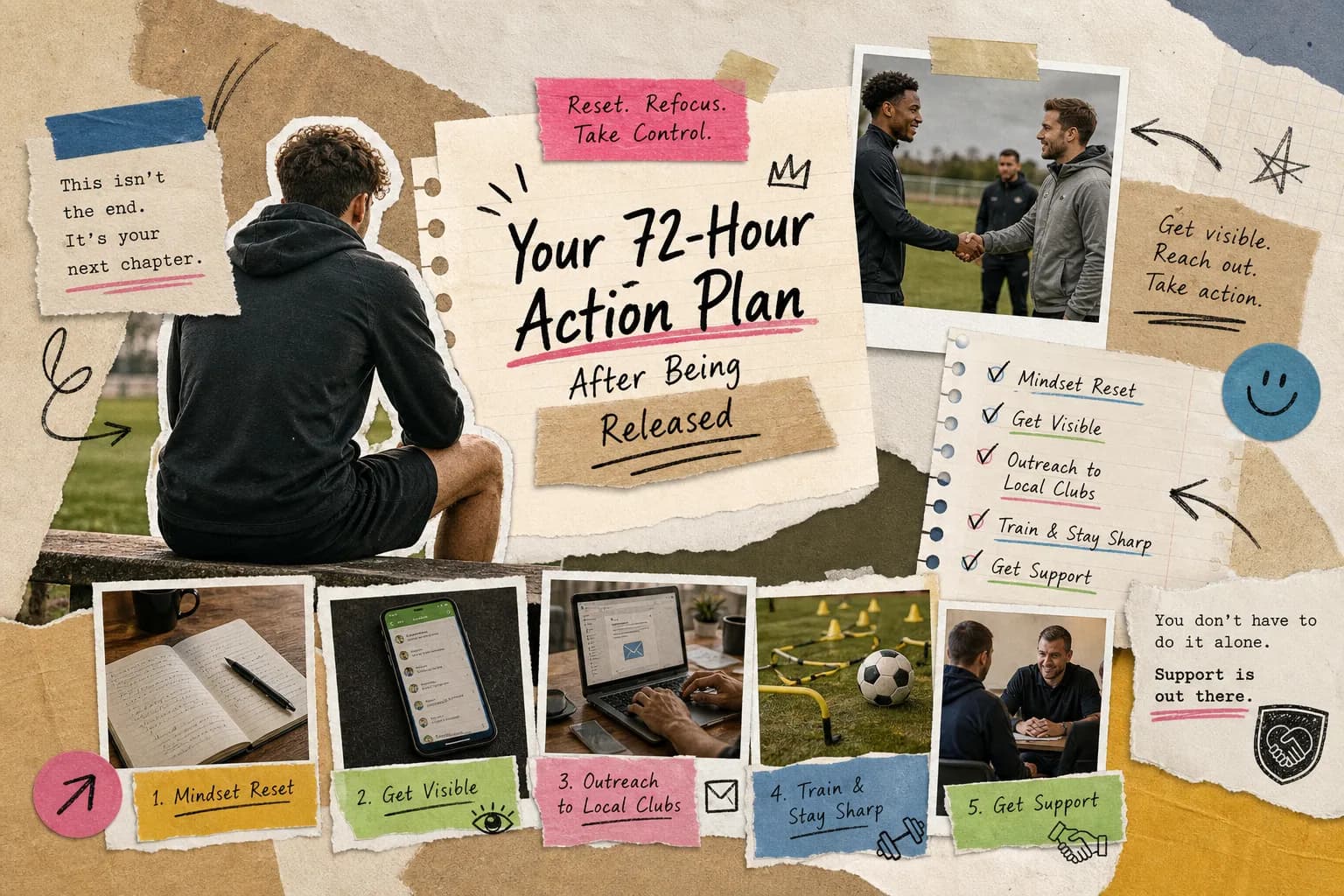
Getting released stings. There's no way around that. Whether you saw it coming or it blindsided you, the moment a club tells you you're no longer part of their plans is a gut punch. But here's the thing about players who recover quickly: they don't wait. They act. The ones still looking six months later are usually the ones who spent the first week processing instead of moving.
This is a practical, hour-by-hour guide covering the five things you need to do in the first 72 hours after being released as a footballer: reset your head, get visible to local clubs, reach out to the right people, keep your body sharp, and gather everything you need for a clean start. By the time this window closes, you should have your profile live, your first messages sent, and your body ready to walk into a trial.
Every day you spend inactive is a day a club in your area is signing someone else. That's not meant to scare you. It's just the reality of how grassroots recruitment works.
First 72 hours after being released: reset your head in hour one
Being released is a genuine emotional blow, and dismissing that to sprint straight into action mode is counterproductive. Give yourself a few hours to sit with it, not a few days. The distinction matters: processing is healthy, spiralling is not. Set a mental deadline, and when it arrives, shift gears.
Common pitfalls in the first few hours include posting on social media out of frustration and making reactive calls to people you haven't spoken to in years. Both make you look panicked. A calm player is a credible player. Clubs and agents notice the tone of your first contact more than you'd think.
Before you do anything else, write down three things: who you need to contact, what documents you need to gather, and where you want to be playing. Ten minutes with a notebook gives you a framework to work from. That's the reset. Now act.
The first practical step: get visible to local clubs before the day is out
Many players spend the first 48 hours on admin and conversations, and because grassroots recruitment moves quickly, that delay matters. Clubs in their area are actively filling squad gaps in the meantime. Visibility costs nothing and it doesn't need to wait until your CV is polished or your agent has made calls. The grassroots recruitment market moves fast at club level. A manager looking for a midfielder this week won't hold the spot open while you get organised.
Create a free profile on Skouto as part of your 72-hour action plan after release. Skouto is a grassroots recruitment platform built specifically for the UK game, designed to connect players and clubs across the non-league pyramid. Getting your profile live is straightforward, and once you're visible, clubs near you can find you and message you directly to arrange a trial. That's not a small thing when you're trying to move quickly.
What to put on your profile straight away: your position, age, area, and a one-line summary of your playing history. You don't need a polished highlight reel at this stage. The profile gets you found; the conversation that follows gets you the trial. A platform focused on grassroots football means the clubs and managers browsing it are looking at your level, so the contacts you receive are relevant rather than long shots.
Hours 12 to 36: contact the right people the right way
Start with current club openings and shortlist those that fit your position, level and travel range before making contact.
Work through three groups in order: your agent if you have one, former coaches and managers who have seen you play, and clubs you've identified as realistic targets. Don't treat every name on your phone as a lead. Five targeted, personal messages will land better than twenty generic ones sent out of panic.
A trial request message to a club needs four or five sentences maximum. State your position, age, and the level you've been playing at. Say you're available now and looking for a trial or training opportunity. Include a link to your highlight video and your player profile. Make it easy for the person reading to say yes. Avoid lengthy backstories, emotional language about being released, or vague requests for "any kind of opportunity." Be specific about what you want.
A former coach who knows your game is your most credible reference. Reach out directly, tell them your situation clearly, and ask two things: whether they'd be comfortable acting as a reference, and whether they know of any clubs currently looking for someone in your position. Most coaches respect players who handle it professionally. It's a normal part of the game, not a favour.
The subject line for any club email should follow this format: Trial Request, your name, your position, your age. Keep the body short and front-load the useful information. Attach your one-page player CV and include a video link in the message itself, not buried in a document. Make it frictionless for whoever opens it.
Keep your body sharp while everything else sorts itself out
The first 24 hours after release should focus on light movement, hydration, nutrition, and sleep. Avoid hard conditioning sessions or heavy lower-body work. A short walk, easy cycle, a proper recovery meal, and an early night. Your body doesn't know your contract ended. It still needs the same inputs as always.
Between 24 and 48 hours, shift into low-load reactivation: easy aerobic work, light technical drills, and mobility. This is also the time to get a physio check-in if anything has been niggling. Address it now, before you're in a trial environment where you need to perform at full capacity. Match fitness doesn't disappear in 48 hours, but movement quality does if you stop moving entirely.
Going into any trial, the goal is to be fresh, not fatigued. In the 48 to 72 hour window, work on dynamic warm-ups, sprint exposures, and change-of-direction at controlled volume. Keep the session short and purposeful. If you feel flat on the day, back off. Better to arrive at 85 per cent sharp than 100 per cent exhausted from over-preparing.
Gather your paperwork and access PFA support
Request your medical records from your former club immediately. Ask specifically for injury logs, any imaging results such as MRI or scans, and physiotherapy and rehabilitation notes. There is no single FA-mandated deadline for clubs to supply these, so request them promptly and follow up if you don't hear back within a few days. Don't leave it until you're midway through a medical at a new club and scrambling to pull it together. Also gather any training references or performance data that might support your case with a new manager.
As a free agent in English football, you can register with a new club outside the normal transfer window. The club needs to submit signed registration documents to the FA or relevant league within five days of signing, and you must be registered before you're eligible to play. For most grassroots levels, this is a straightforward process, but the club needs to initiate it. Know your registration status before your first trial conversation so you can answer questions clearly rather than fumbling through it.
The PFA runs a 24/7 confidential wellbeing and counselling helpline for current and former professionals. If the mental side of the release is hitting hard, use it, that's what it's there for. For financial support, education bursaries of up to £1,500 per course, medical grants, and hardship assistance through the Benevolent Fund are all application-based. Contact the PFA directly to find out which fund applies to your situation, and start the process early rather than when you're already under financial pressure.
Build your trial pack before the 72 hours are up
Put together a one-page player CV covering your name, age, position, playing history, and two coach references. Compile a highlight video that is short, clean, and front-loaded with your two or three best clips. Include full-match footage if you have it, because some recruiters want context beyond the reel. Don't over-produce it. A straightforward, honest package beats a flashy one that takes another week to pull together and arrives too late.
Your Skouto profile, your highlight video, and your outreach messages should all point to the same thing: a player who is available, professional, and ready to train now. Consistency across everything you send out is what makes you look credible rather than scrambled. A club that finds your profile at midnight should be able to message you, view your video, and get your contact details without clicking away from the platform.
The 72-hour window isn't about having everything perfect. It's about having enough ready that any club that finds you can take the next step immediately. That's the standard to aim for.
Act now, not when you feel ready
The players who bounce back fastest in the first 72 hours after being released are the ones who treated it as a working window, not a cooling-off period. Mindset first, then visibility, then outreach. In that order, and starting today.
Get your Skouto profile live. Send your first five messages to the right people. Keep your body ticking over with a structured recovery plan. None of that is complicated. It's just the game being played off the pitch as well as on it.
Clubs in your area are looking for players right now. Create your Skouto profile today, the essential first step in your 72-hour action plan after release. The only question is whether they can find you.
Ready to put this into practice? Create your Skouto profile or browse open trials.