
Guide
How to Get Feedback After a Grassroots Football Trial
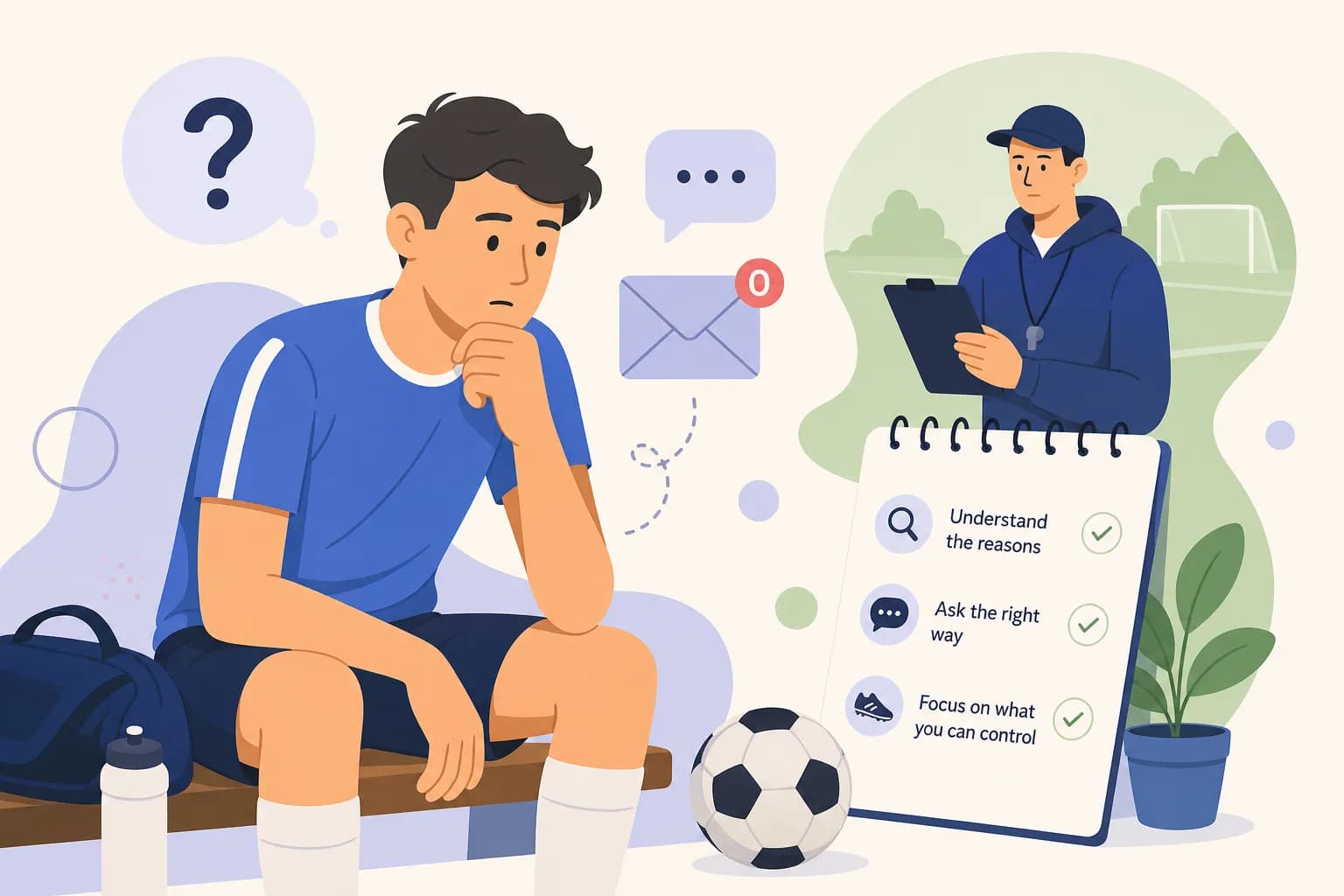
Why am I not receiving feedback after football trials? If you've ever given everything at a trial, first to the ball, holding your position, putting in a shift from the first whistle to the last, only to go home and check your phone every hour for three days and hear absolutely nothing, you're far from alone. No message. No email. Just silence.
This is one of the most demoralising parts of the grassroots football experience in the UK, and it happens to countless players every pre-season. The frustrating truth is that the silence is almost never personal. Understanding why coaches go quiet, what they were actually assessing during your trial, and how to follow up properly can change your entire experience of the recruitment process.
This article covers all of that: the real reasons behind the silence, what coaches are looking for on the day, exactly when and how to ask for feedback, and what to do if no reply comes. It's also worth knowing that direct-messaging platforms designed for grassroots recruitment are beginning to shift the communication culture by keeping the conversation between players and clubs open from the very start, rather than letting it disappear after the final whistle.
Why am I not receiving feedback after football trials?
The silence isn't indifference. In most cases, it's a structural problem baked into how grassroots trials are run, and understanding that distinction is worth doing first.
The volume problem no one talks about
A single open trial at a grassroots club can attract dozens of players in one session. Providing genuinely useful, individual post-trial feedback to every one of those players is not realistic at that scale. When coaches do try, the result is often a string of near-identical generic comments: "good effort," "showed promise," "keep working hard." Players and parents recognise those phrases immediately for what they are, which damages trust rather than building it. That fear of producing meaningless feedback is itself one of the reasons many coaches stop providing it at all.
What happens inside the club once selections are made
The moment a coach identifies the players they want, their attention shifts completely to pre-season planning, squad organisation, and team preparation. Players who weren't selected fall outside that planning process entirely. It isn't a deliberate snub; it's a practical reality. Most clubs at Steps 4 to 10 don't have a post-trial workflow that includes following up with unsuccessful trialists, so communication with those players simply stops. The club moves forward, and that contact chain quietly goes cold.
The subjectivity problem and why coaches avoid confrontation
Many selection decisions are instinctive rather than objective. A coach might choose one player over another because of how they moved off the ball, how they communicated under pressure, or simply how they fitted the shape the manager wanted to run. Those are genuinely difficult qualities to articulate to someone who didn't make the cut. Offering a vague explanation like "we went in a different direction" feels safer than a detailed breakdown that could invite debate or, worse, an argument. Avoiding that confrontation is a recognised pattern in coaching culture at this level, and it leads directly to silence, and to players wondering why they're not receiving feedback after football trials at all.
What coaches are actually evaluating during a trial
Before you can interpret academy trial feedback, or conduct your own self-assessment when none arrives, you need a clear picture of what coaches were watching in the first place.
Technical and physical attributes coaches notice immediately
Coaches form a clear impression of a player's core technical qualities very early in a session. First touch, passing range, dribbling under pressure, shooting technique, speed, agility, and stamina are all assessed before a player realises they're being closely watched. At the non-league and grassroots level specifically, physical attributes carry significant weight. At Steps 4 to 10, a physical, high-work-rate player will often edge out a technically gifted player who doesn't press or compete for second balls, coaches at this level are consistent on this point.
Attitude, coachability, and the less obvious factors
The second tier of assessment is behavioural, and it's where borderline decisions often get settled. Coaches watch how a player responds to a mistake: do they drop their head, or do they immediately press to win the ball back? Do they communicate with teammates, organise the defensive shape, or give encouragement after a missed chance? Are they listening when the coach gives a brief instruction, and do they actually apply it? These qualities are harder to improve quickly than technical skills, but coaches at every level of the grassroots game cite attitude and coachability as the deciding factor between two players of similar technical ability. Understanding these football trial rejection reasons can help you self-assess honestly, even when no formal feedback comes.
When to follow up if you're not receiving feedback after trials
Timing and method both matter here. Getting either wrong can make a genuine, professional request feel pushy or naïve. Most players instinctively get at least one of these two elements wrong, which is worth bearing in mind before you send anything.
The 24 to 48 hour window is your best chance
Reaching out within 24 to 48 hours after a trial keeps the session fresh in the coach's mind and signals that you're serious about your development. Waiting a week or longer risks the coach no longer remembering your performance clearly enough to offer specific comments, particularly if they ran multiple sessions in that window. At the same time, messaging on the same evening, especially within a few hours of leaving the pitch, can read as impatient. The following morning after the trial is the ideal moment for an initial contact: polite, timely, and professional. If you're waiting on a formal selection decision rather than developmental feedback, allow five to seven days before following up, giving the club time to complete their process.
Choosing the right channel for your request
If the trial was arranged through a club's official contact, use email. It creates a clear, professional record and gives the coach the space to respond without feeling put on the spot. If the original contact was made through a platform's messaging thread, reply within that same conversation to keep everything in context and make it easy for the coach to find. Avoid chasing coaches on personal social media accounts unless they made first contact there, as it can feel intrusive and is unlikely to get the response you're looking for.
How to ask for feedback without making it awkward
The framing of your message is the single biggest factor in whether a coach replies. Get this right, and you shift the odds significantly in your favour. The distinction to keep in mind is simple: growth-oriented requests get responses; defensive or challenging ones get ignored.
The tone that actually gets a response
The most effective feedback requests are short, grateful, and growth-focused. Coaches are far more willing to reply when a player asks "what should I be working on?" rather than "why wasn't I selected?" The first question is easy and positive to answer. The second puts a coach on the defensive and makes them feel their decision is being challenged. Open with a brief thank-you for the opportunity, be clear that you're asking because you want to improve, and make it easy for the coach to respond with specific observations by referencing moments from the session itself. This approach, essentially asking how to ask a coach for feedback after a trial, is as important as the actual words you use.
Three ready-to-use message templates
Here are three practical templates you can adapt based on your situation. Each follows the same principle: thank-you opener, growth-oriented reason for asking, specific questions, and a low-pressure close.
Template 1: For players contacting a coach directly "Hi [Coach's name], thanks again for the opportunity to trial with [club] on [date]. I really enjoyed the session. If you have a moment, I'd really value any feedback on my performance, specifically around my defensive positioning and work rate off the ball. I'm focused on improving and any honest thoughts would be genuinely helpful. No pressure at all if you're short on time. Thanks, [Your name]."
Template 2: For a parent supporting a younger player "Dear [Coach's name], thank you for including [child's name] in the trial on [date]. They found the experience really valuable and are keen to keep developing. If you're able to share any brief feedback on where they showed promise and what they should focus on, we'd really appreciate it. We want to make sure we're supporting their growth in the right direction. Many thanks, [Parent's name]."
Template 3: Short version for informal or busy coaches "Hi [Coach's name], thanks for the session on [date]. If you get a spare minute, one or two things I could work on would be really useful. Happy to hear anything at all. Cheers, [Your name]."
Mentioning something specific from the trial, a particular drill, a position you were asked to play, or a moment you felt exposed, makes the coach's job considerably easier and increases the chance of a detailed reply.
Why the communication gap is a structural problem (and how some clubs are fixing it)
This isn't a story about individual coaches failing players. It's a story about a systemic absence of communication infrastructure across most grassroots clubs in the UK.
The infrastructure that most grassroots clubs are missing
Professional academies have structured multi-disciplinary reviews, formal feedback processes, and dedicated staff responsible for player communication. A volunteer coach running a Saturday morning trial at a Step 7 club doesn't have any of that. There's no CRM system, no feedback template, no process for following up with a large group of players by Monday. The gap isn't laziness or indifference; it's a resource and infrastructure problem that affects the vast majority of clubs operating below the professional game. It's also one of the main academy rejection advice points that experienced coaches raise: the system itself isn't built to communicate.
How direct messaging platforms are changing this dynamic
This is where the structure of the recruitment process itself starts to matter. Platforms that connect players and clubs through a shared messaging thread, built into the trial discovery process from the beginning, mean the communication channel is already open before a player sets foot on the pitch. After a trial, a player doesn't need to track down an email address or send a cold message to someone they met once. The conversation is already there, which removes much of the friction that leads to silence. Skouto works on exactly this model, integrating direct messaging into grassroots recruitment so that post-trial contact feels like continuing a thread rather than starting one from scratch. That kind of infrastructure shift makes post-trial communication feel normal rather than awkward, a meaningful improvement on the current reality for most players who are not receiving feedback after football trials.
Your action plan when you still don't hear back
Not every coach will reply, no matter how well you time or phrase your request. You need a clear path forward regardless.
Self-assessment as a substitute for academy trial feedback you didn't receive
Conduct your own honest review using the same criteria coaches actually use. Where did you feel confident during the session? Where did you feel exposed or caught out? If you have any video footage from the trial, reviewing it even briefly will reveal things you won't remember clearly by the following day. Aim to identify one technical area and one behavioural area to focus on before your next opportunity. That structure gives your self-assessment real direction rather than vague reflection.
Keeping momentum: finding the next opportunity
When you’re ready for another session, find open trials and check the requirements before contacting the club.
One club's silence is not a verdict on your potential. Grassroots football across the UK has hundreds of clubs recruiting at any given time, and most operate in concentrated windows around pre-season and January. No feedback after one trial is not the end of the road, it's the start of a process. Some platforms offer profile and search functions that can increase your visibility to local coaches, helping you stay on the radar without having to wait for the next open trial announcement. Skouto, for example, is built around this kind of grassroots discovery. Every trial you attend, whether you hear back or not, is data: information about your game, your fitness, your composure under pressure, and what you need to work on before the next one.
The silence is a system problem, not a personal one
If you're still asking yourself why you're not receiving feedback after football trials, the core answer is this: that silence is almost never personal. It is the product of volume, subjectivity, and a near-total absence of post-trial communication infrastructure at most clubs. Players who understand that are better placed to follow up professionally, self-assess honestly, and stay focused on building toward the next opportunity.
Asking for feedback is always worth doing, provided you use the right tone and the right timing. A short, growth-focused message sent within 48 hours will land far better than a frustrated email sent a week later. And if no reply comes, that tells you something about the club's communication culture, not about your ability as a player.
Use every trial as a learning experience. Improve your profile visibility, stay active in your local football community, and make sure the right clubs can actually find you. The grassroots game is slowly building better tools for exactly this, and engaging with those tools can meaningfully increase your chances of being noticed.
Ready to put this into practice? Create your Skouto profile or browse open trials.